Chinese President Xi Jinping stunned the international community Tuesday by announcing sweeping democratic reforms in response to three weeks of unprecedented youth-led protests that have paralyzed Beijing’s financial district. The demonstrations, which began with university students demanding greater political participation, have grown into the largest civil unrest China has seen since 1989.
The protests started January 8th when Beijing University students blocked traffic on Chang’an Avenue, demanding direct elections for local representatives. Within days, the movement spread to 47 universities across 12 provinces, with protesters using encrypted messaging apps to coordinate simultaneous demonstrations despite internet restrictions.
## Historic Policy Reversal Shakes Communist Party
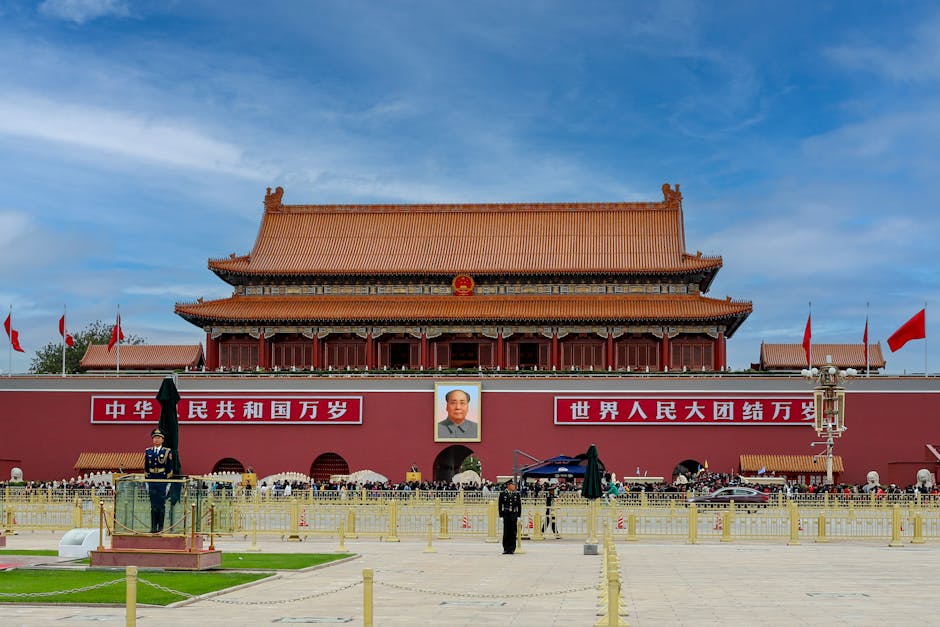
Xi’s announcement marks the most dramatic political shift in China since market reforms began in the 1980s. Speaking from the Great Hall of the People, Xi outlined a three-phase democratization plan that will introduce competitive local elections by 2027, expand press freedoms, and establish an independent judiciary within five years.
“The voice of China’s youth must be heard,” Xi declared, flanked by Politburo members who appeared visibly uncomfortable during the 47-minute address. The reforms represent a complete reversal from Xi’s previous hardline stance on political dissent and centralized control.
The announcement came after internal Communist Party documents leaked to Hong Kong media revealed deep divisions within leadership. Sources within Zhongnanhai, the party’s leadership compound, report that younger Politburo members, led by Vice Premier Liu He’s protégé Wang Xiaodong, had threatened mass resignations unless reforms were implemented.
Key provisions of Xi’s reform package include:
– Direct elections for county-level positions starting in Guangdong Province by December 2026
– Establishment of independent anti-corruption courts in Shanghai and Shenzhen as pilot programs
– Relaxation of media censorship laws, allowing limited criticism of local government policies
– Creation of a National Youth Council with advisory powers to the State Council
## Economic Pressures Drive Political Change
The reforms come as China faces its worst economic crisis in decades, with youth unemployment hitting 46.5% in major cities according to leaked government statistics. The official rate of 21.3% has sparked widespread skepticism, fueling protest movements across the country.
Wang Lei, a 22-year-old economics student at Tsinghua University who helped organize the initial protests, told foreign journalists that economic frustration drove political demands. “We studied hard, got degrees, but there are no good jobs. Then we see officials’ children getting positions through connections. This system doesn’t work for us.”
The protests have cost China’s economy an estimated $23 billion in the first three weeks of January alone, as factory workers in Shenzhen and Guangzhou joined student demonstrations. Foreign investors pulled $8.7 billion from Chinese markets since the protests began, according to Capital Economics data.
Technology companies, traditionally loyal to the Communist Party, have seen employee walkouts in Beijing, Shanghai, and Hangzhou. ByteDance, Tencent, and Alibaba executives privately warned party officials that continued unrest could trigger massive capital flight to Singapore and South Korea.
## International Response Splits Along Predictable Lines
Western governments cautiously welcomed Xi’s announcement while maintaining skepticism about implementation. President Biden called the reforms “a positive step” but noted that “actions matter more than words” during a White House press briefing Wednesday.
European Union foreign policy chief Kaja Kallas announced that the EU would lift some sanctions on Chinese officials if concrete democratic progress occurs within 18 months. However, she emphasized that human rights monitoring would intensify during the transition period.
Russia’s response proved more complex. President Putin congratulated Xi on “finding internal solutions” but avoided endorsing democratic reforms. Kremlin sources suggest Putin fears similar youth movements could emerge in Russia, where economic conditions have deteriorated since 2022.
Regional allies showed mixed reactions. Singapore’s Prime Minister Lee Hsien Loong praised Xi’s “pragmatic approach,” seeing opportunities for increased investment cooperation. However, North Korea’s state media ignored the announcement entirely, while Vietnam’s Communist Party expressed “concerns about stability” in private diplomatic channels.
## Implementation Challenges and Timeline Uncertainties
Despite Xi’s bold announcements, significant obstacles remain for meaningful democratic transition. The People’s Liberation Army leadership has stayed conspicuously silent on the reforms, raising questions about military support for political changes.
Provincial party secretaries in Xinjiang, Tibet, and Inner Mongolia have privately expressed opposition to electoral reforms, according to sources familiar with internal party communications. These regions, with significant ethnic minorities, present particular challenges for Beijing’s democratization timeline.
The reform timeline appears ambitious given China’s institutional constraints:
– Local election preparations require new legal frameworks, candidate vetting systems, and voter registration processes
– Independent judiciary establishment needs constitutional amendments currently blocked by conservative party factions
– Media freedom implementation faces resistance from propaganda department officials whose careers depend on censorship
Financial markets remain volatile as investors assess implementation risks. The yuan has fluctuated between gains and losses of 3% daily since Xi’s announcement, reflecting uncertainty about political stability during transition periods.
Xi’s democratic reforms represent either China’s most significant political evolution in 75 years or an elaborate tactical retreat designed to preserve Communist Party power through controlled liberalization. The next six months will determine whether these changes produce genuine democratic participation or merely create new mechanisms for authoritarian control.
International observers should watch three key indicators: actual candidate selection processes in Guangdong’s pilot elections, measurable reductions in internet censorship, and establishment of independent court systems in designated cities. Without concrete progress in these areas by late 2026, Xi’s democratic promises will prove as hollow as previous reform announcements.
The world is witnessing either China’s democratic awakening or its most sophisticated authoritarian adaptation yet. Only sustained international pressure and domestic vigilance will ensure these reforms deliver real political change rather than cosmetic adjustments to preserve existing power structures.